
Treatment of ALK-positive (ALK+) lung cancer has advanced considerably in recent years thanks to tyrosine kinase inhibitors (TKIs). Yet the need for new therapies remains substantial, particularly when patients develop resistance to existing treatments. TRI-611 is a promising new medicine that may come to play an important role in the future.
What makes TRI-611 different?
TRI-611 works differently from the classic TKIs. Where those mainly block ALK activity, TRI-611 is understood to act through a different and novel mechanism. That makes it especially interesting for ALK+ patients for whom current treatments work less well or lose their effect.
It is precisely for this reason that TRI-611 is seen as a potential breakthrough: not simply the next variant within the same approach, but a new treatment strategy.
Explanation from Dr Alexander Spira
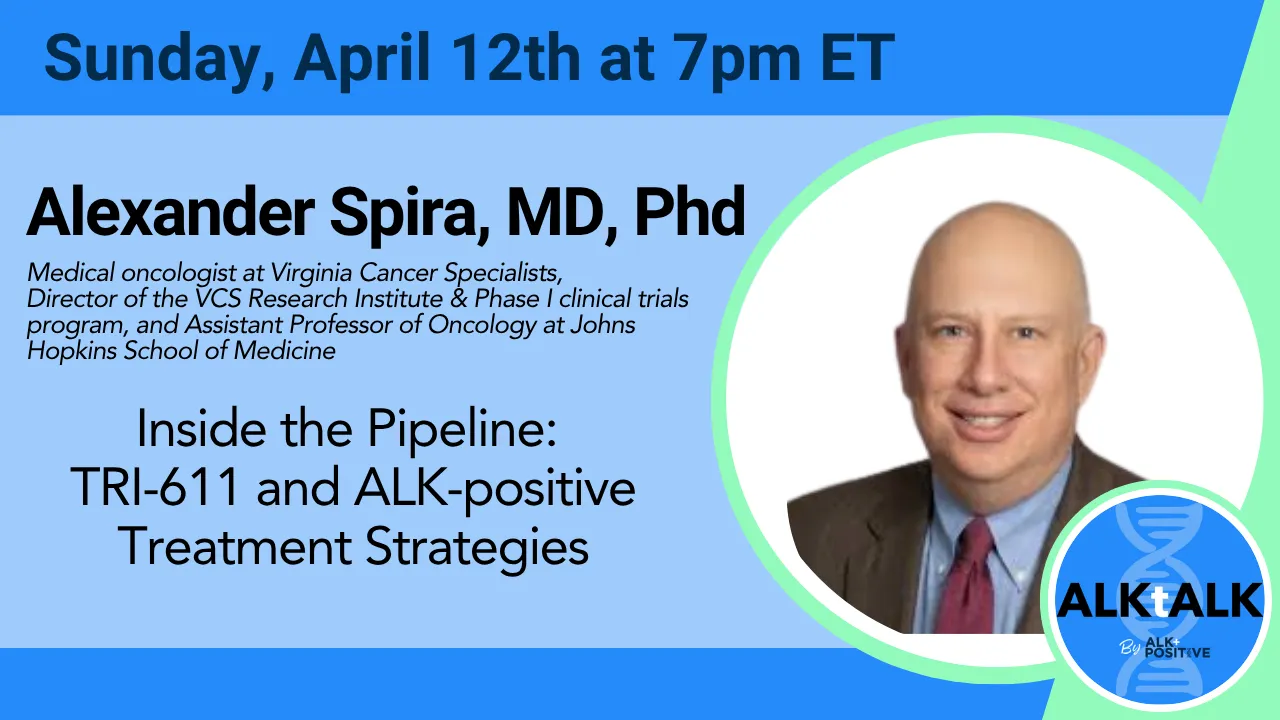
During an online session hosted by ALK Positive Inc., Dr Alexander Spira, MD, PhD gave further detail on TRI-611 and its potential impact on the treatment of ALK+ lung cancer.
Dr Spira is a medical oncologist at Virginia Cancer Specialists, director of the VCS Research Institute and Phase I clinical trials programme, and affiliated with Johns Hopkins. He is regarded as an authority in clinical research and innovative cancer therapies.
In his presentation he discussed, among other things, the distinctive mechanism of TRI-611, the ongoing clinical studies, and the possible place of this agent within future treatment strategies for ALK+ patients.
Watch the presentation again
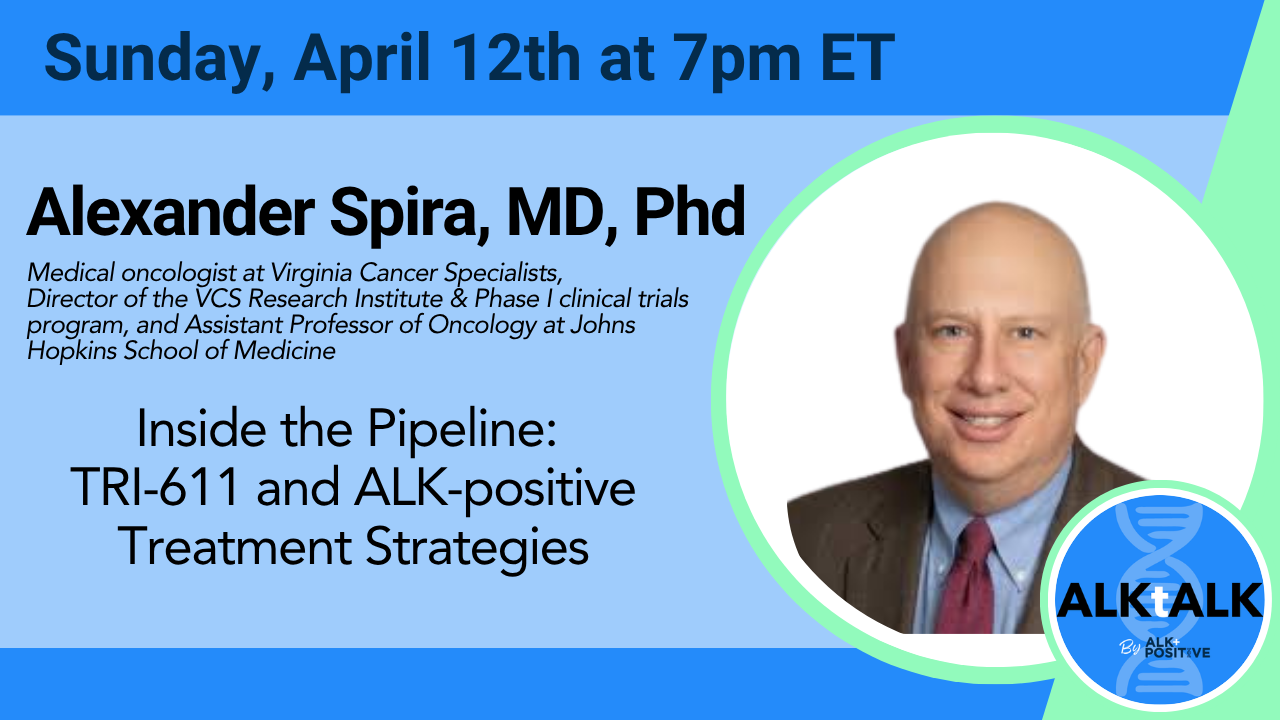
The recording of the Zoom presentation (in English) will be shared on the YouTube page of ALK Positive Inc.
Conclusion
Although TRI-611 is still under investigation, it appears to be a promising new step for ALK+ lung cancer patients. Because of its different mechanism of action, it may in future become an important addition to existing treatments.