
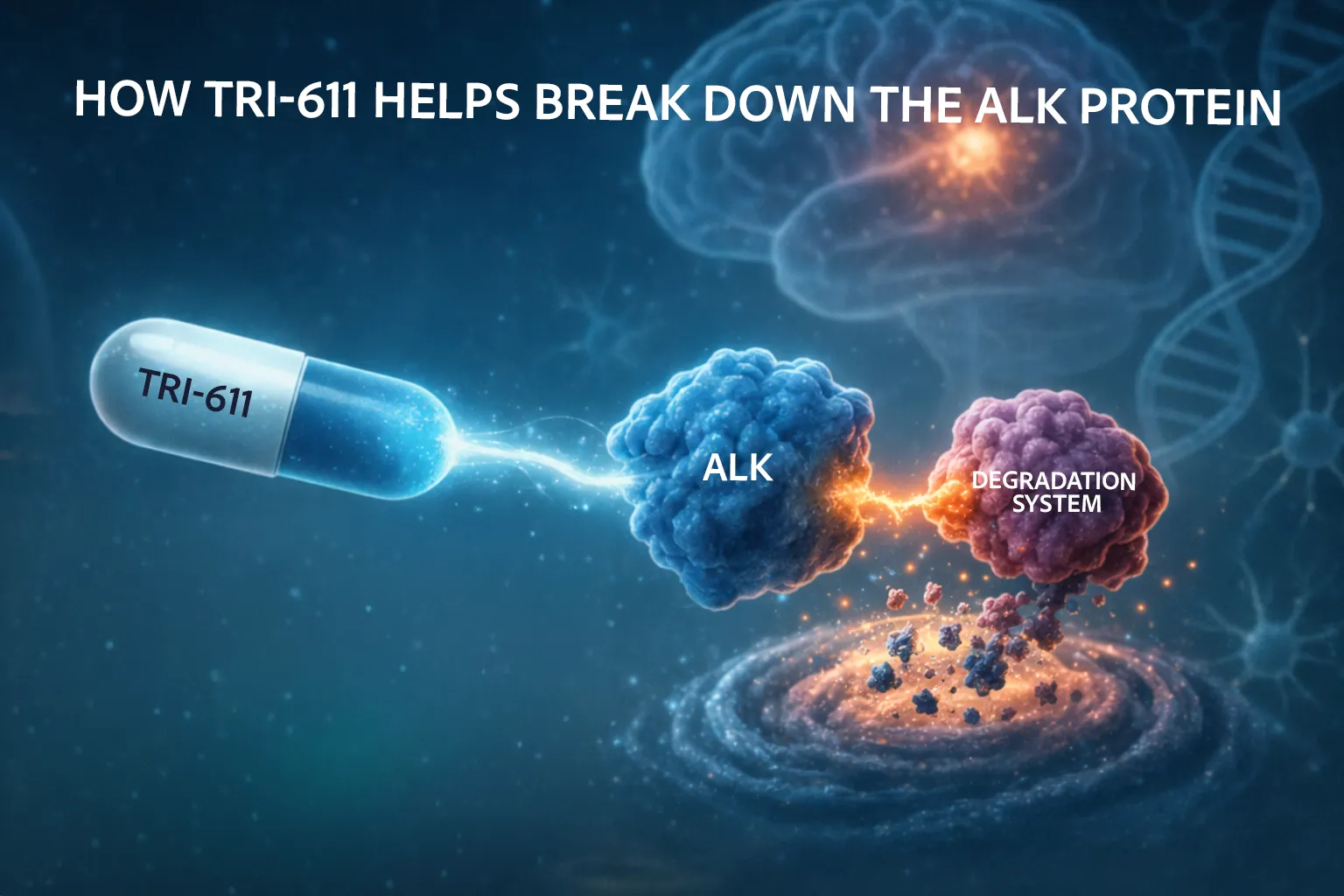
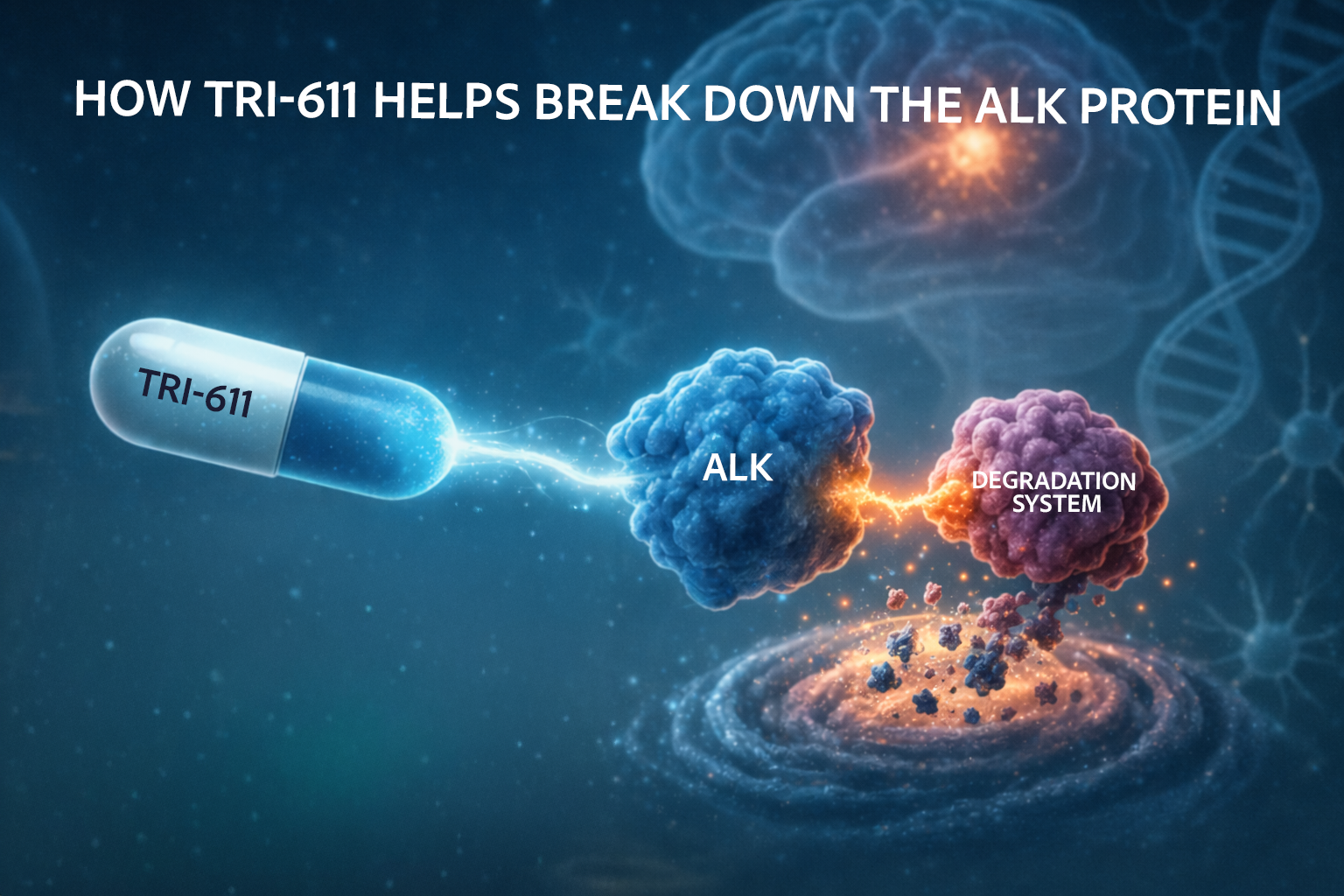
New research has begun into TRI-611, an experimental medicine for people with ALK-positive non-small cell lung cancer. That is hopeful news for patients and their families, particularly because there remains a need for new treatments when existing therapies begin to work less well.
What makes TRI-611 distinctive is that it works differently from classic ALK inhibitors. Instead of only blocking the abnormal ALK protein, this agent attempts to have the cell itself break the protein down. Researchers see that as a promising new approach.
Another important point is that TRI-611 is designed to reach the brain as well. That is relevant, because ALK lung cancer can often spread to the brain, which sometimes makes treatment more difficult.
This research is of particular interest to patients for whom earlier ALK inhibitors are working less well. At the same time, it is important to know that the medicine is still in an early clinical study. At this stage, researchers are first looking at safety, possible side effects and the first signals of activity. Such studies are also usually open to a limited number of patients.
TRI-611 is therefore not yet a treatment that is routinely available today. But it is an important step forward. It shows that research into ALK lung cancer is continuing, and that work is being done on new ways to tackle the disease more precisely and potentially more effectively.
Read the full article (in English) on the Allsci, Clinical Trials News website via this link: View the original article.