
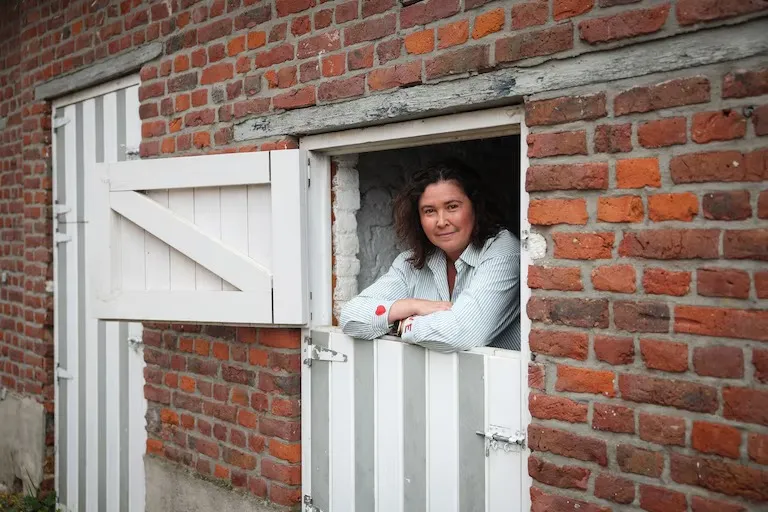
Marie-Ange has a rare form of lung cancer caused by a genetic alteration. ©Bernard Demoulin
Marie-Ange has a rare form of lung cancer, sometimes called light-smoker or non-smoker lung cancer, caused by a genetic alteration. She is seeing promising results from targeted therapy.
By Laurence Dardenne, Health, Well-being and Beauty journalist — La Libre.
Published on 14 September 2026 at 11:56. Updated on 14 September 2026 at 12:29.
Smiling on the doorstep of her home nestled in the Liège countryside, Marie-Ange — “a name that was meant to be”, as she puts it — immediately sets the tone. The colourful embroidery on her white blouse catches the eye. It sends an unmistakable message: “love” and “amour”. “It is no coincidence that I put it on today,” she tells us. “Love and life are what matter most.”
Clearly content, the 51-year-old speaks fondly of her children, Lionel (28) and Giulia (11), her two stepdaughters, Maxine and Romane, and “Chéri”, otherwise known as Laurent, her partner, who is a teacher. As she is herself. “I am a music teacher,” Marie-Ange begins, before correcting herself: “Or rather, I was. Because that was my life before.”
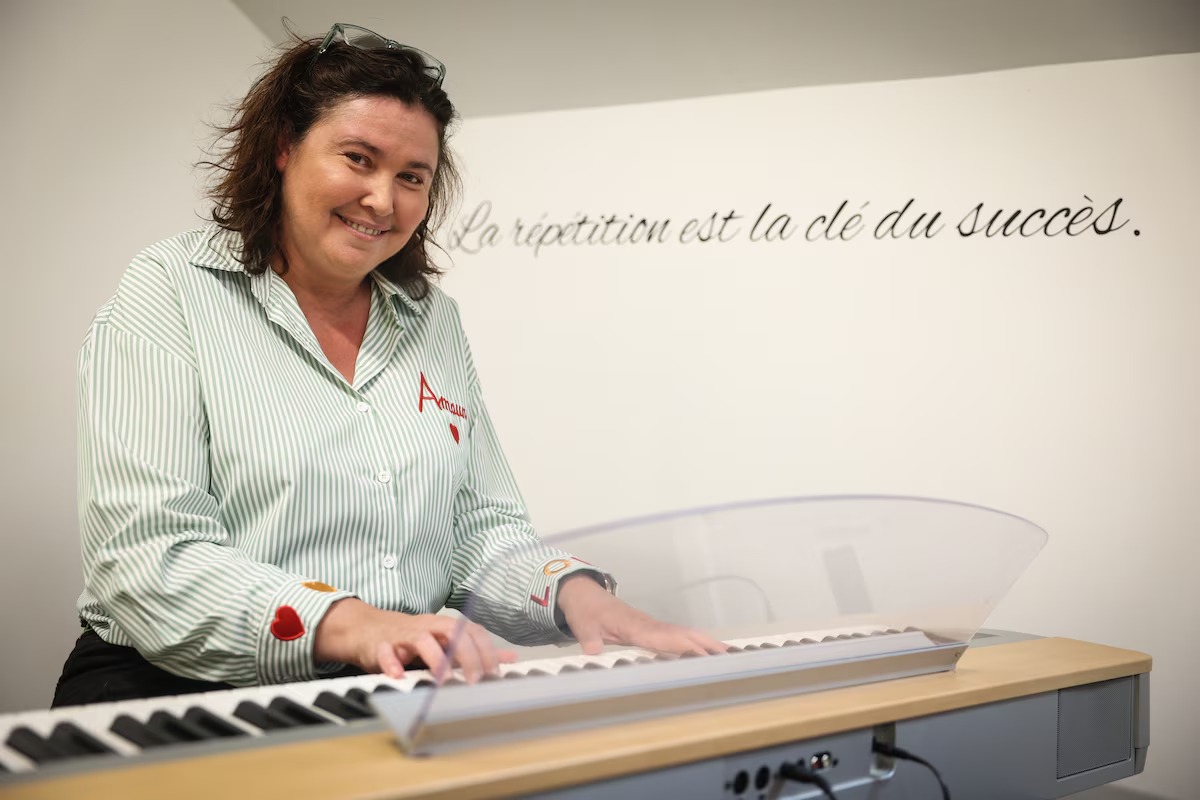
In the studio where she used to teach music, Marie-Ange returns to the piano to play a few notes. ©Bernard Demoulin
Before 25 August 2023, when the devastating news came. A blunt announcement. Completely unexpected. “I was 48, and everything revolved around the children and music,” the Liège resident tells us in the studio where her electric piano still stands. A few months earlier, “I was teaching here, and climbing the stairs to get here left me short of breath. When I spoke or sang, I would end my sentences with a little cough. My GP thought it was a minor respiratory virus. He prescribed antibiotics. They made no difference. I felt very tired, but I put it down to the end of the school year and my sedentary lifestyle.”
At 75% respiratory capacity
Her partner noticed another symptom: “When I was lying down, there was a crackling in my throat as I breathed. Like Coco Pops whenever I breathed out! We kept an eye on this strange symptom.” A doctor friend advised her to see a lung specialist. “I was very lucky: there had been a cancellation, so I got an appointment very quickly.”
She was less fortunate when the specialist told her that her respiratory capacity was at 75%. “That explained the breathlessness and quite a few other things. He asked me to have a scan. And once again, a stroke of luck: it was 31 July, and the woman told me there was a cancellation on 4 August. I took it. But when I went for the examination, I could feel that something was wrong.”
Unfortunately, her intuition proved right. “We had planned to go on holiday on the 6th, but on the 5th, the lung specialist called and asked me to come to his office on Monday morning.” After some discussion, Marie-Ange was able to go away for a week, but had to return to the specialist immediately afterwards for further tests: a PET scan, a bronchoscopy and a full assessment.
“I have to admit, we did not have a good holiday,” she recalls.
On 25 August, the diagnosis came: lung cancer. “At first, it was presented to me as a conventional cancer. Of course, I was asked whether I smoked. I smoked a little when I was young, then stopped for several years, including during the six-year IVF journey to have my daughter. The lung specialist actually confirmed that I did not have a smoker’s lungs.”
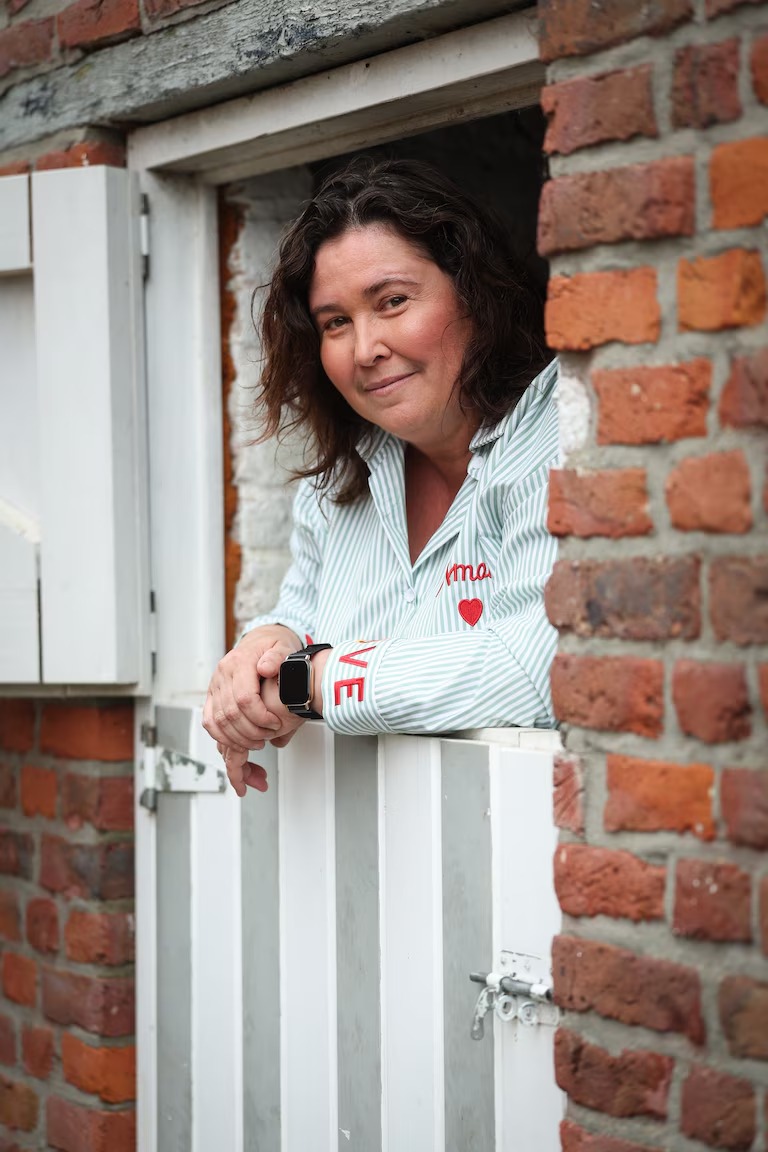
Living with a rare form of lung cancer, Marie-Ange embraces the present moment more than ever. ©Bernard Demoulin
“Put your affairs in order”
But, the mother continues, “I remember very clearly what the lung specialist said as we left his office on 25 August. He told me: ‘Put your affairs in order.’ And I have to admit that, even today, those words still upset me.”
“From the start, I had told him: ‘Explain it to me.’ I am someone who needs to understand. I wanted to see the scan images. I also wanted to know why he had said those words to me. He added: ‘It is simple: if you had not come to see me in August, you would not have made it past Christmas.’”
The brain MRI and other tests confirmed stage 4. The cancer had already spread: the main tumour in the left lung resembled an enormous spider’s web, the right lung was speckled with small spots, and the entire chain of lymph nodes was affected. In her brain, the doctor found numerous metastases. “My starry sky, as I called it. That was all there was. Four large metastases and lots of little spots everywhere.”
A genetic alteration: the ALK gene
The biopsy confirmed the origin of the tumour: an alteration involving the ALK gene. This gene had accidentally fused with another, triggering uncontrolled cell multiplication. This form of lung cancer, known as ALK-positive lung cancer, is rare (around 4% of cases) and affects a particular group: younger people, most often women, who have never smoked or have smoked very little.
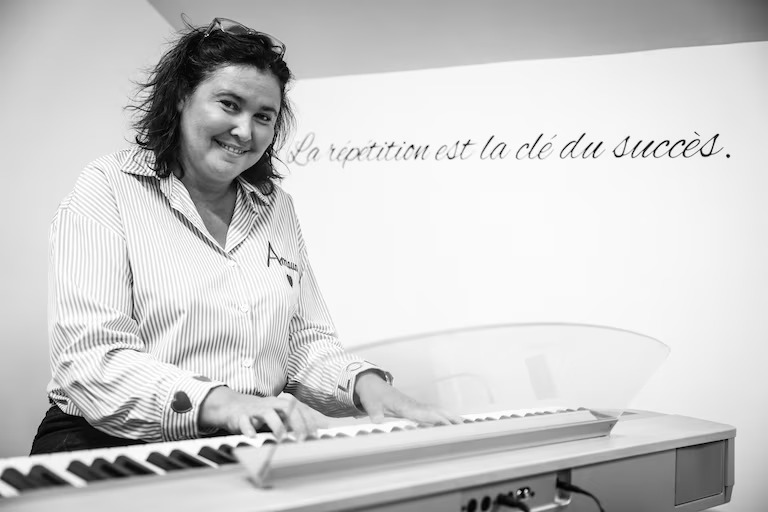
Marie-Ange has a rare, genetically driven form of lung cancer, sometimes called non-smoker lung cancer. Mots pour Maux ©Bernard Demoulin
“Why me? What terrible thing have I done? Those were the first questions I asked myself. Because I had smoked a little, of course I felt guilty. Then I wondered whether it was the environment, pollution, a poor diet, too little physical activity… We had the house tested for radon on the lung specialist’s advice. You look for the causes; you cannot help it. You try to understand why. During the first year, I felt very guilty. Then I told myself that if it was a genetic mutation, it was simply bad luck.”
She also had to tell the children: “That was very difficult. My eldest reacted wonderfully, like an adult. He encouraged me, and still does. My partner’s two daughters, who were fifteen and thirteen at the time, cried a lot; they understood how serious it was. Then we had to tell my little girl, who was eight at the time. That was much more complicated… In the end, my partner told her. Since then, she has been growing up a little faster and worries about me a great deal. But very quickly, we all agreed that we would speak to one another directly and honestly.”
Targeted therapy to take at home
The proposed treatment took Marie-Ange by surprise. Not conventional chemotherapy, but medication at home. “When we arrived at the clinic, there was a huge box of 224 tablets in front of me. I had expected conventional chemotherapy, to lose my hair, to be going to hospital all the time. I was very frightened. In fact, it was targeted therapy: four tablets in the morning and four in the evening.”
No side effects? “Oh yes, my goodness; I am the queen of side effects!” she exclaims. “Unlucky me. Diarrhoea, constipation, blurred vision, tremors, muscle wasting, extreme fatigue… The lot.”
Fortunately, physical relief came quickly. “Very soon, I felt that despite the side effects, I could breathe more easily.” The improvement was soon confirmed by imaging: “At the first scan, my tumour had shrunk by half. After three months, there were no metastases left in the other lung. And in my brain, my ‘starry sky’ had disappeared! It was impressive to see such positive results. During that first year, everything revolved around those tests and waiting to see whether things were still going well. I preferred not to take anything on.”
The doctors remained cautious. They made no predictions. “They say: we will take it three months at a time. My doctor told me: you will never hear me use the word remission. This is an incurable cancer. However, targeted therapy aims to turn the cancer into a chronic disease and keep it under control. And we will make sure your quality of life is as good as possible.”
In August 2024, a year after the diagnosis, the first recurrence brought two brain metastases, which were treated with targeted radiotherapy. Then, in spring 2026, complications arose: radiation necrosis — a delayed side effect of radiotherapy — caused swelling in the brain and required intensive corticosteroid treatment. “Seeing your body swell and change is very difficult for your self-image and self-confidence.”
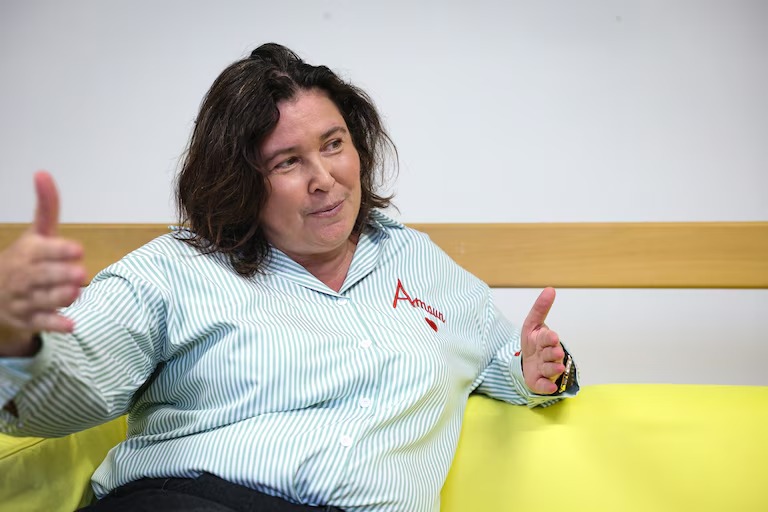
Marie-Ange has had to accept changes in her body caused by corticosteroids. ©Bernard Demoulin
Raising awareness and challenging prejudice
Marie-Ange wants to share her story to raise awareness of this rare cancer and stress the importance of early detection. This is also what prompted her to join ALK Positive Belgium (https://www.alkpositivebelgium.be/), an essential platform for discovering the new face of lung cancer and supporting patients affected by this mutation.
She also emphasises the importance of listening to your body: “If I had not paid attention to my breathlessness, my fatigue, the crackling in my throat or that doctor friend’s advice, I would have let it go… And perhaps I would no longer be here to talk to you today.”
“I also want to say: stop the guilt surrounding lung cancer! The prejudice that ‘you smoked, so it is your fault’ has to end. Today, we can show that young people in excellent health can develop this cancer. It can affect anyone.”
“I am aiming for ten years”
Asked about her outlook today, Marie-Ange says, still with a gentle smile: “We do not know what tomorrow will bring. But when I get up in the morning, I tell myself: I have been given another day. Hopefully a good one, although that is not always the case. There are days when I am so tired that I cannot do anything, and then I am furious inside. But on the days when I feel really well, of course I savour them all the more.”
Looking to the future, Marie-Ange remains determined: “Research shows that there are ‘long-term responders’ who have been here for more than ten years. So I am aiming for ten years! I am holding on so I can be here for as long as possible, especially for my youngest. I am not afraid of death, but I am afraid of leaving behind the people I love.”
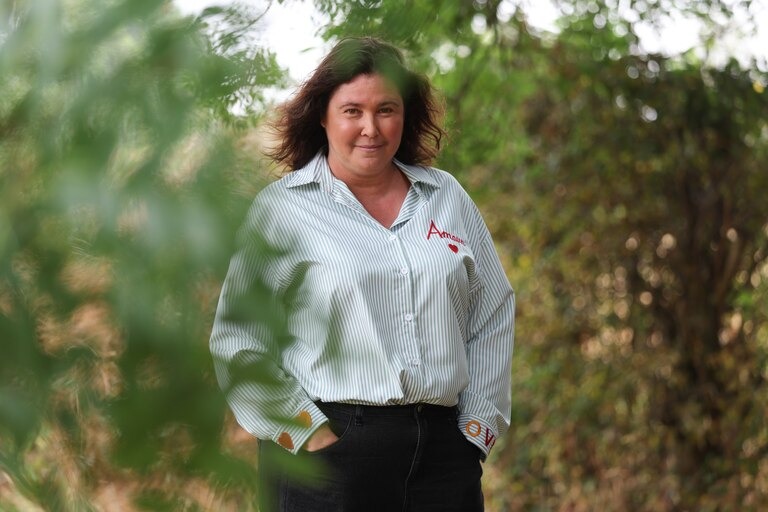
With strong support around her, Marie-Ange remains optimistic and confident. ©Bernard Demoulin
Previously a very anxious person, the mother continues: “I am not stupid. I do not live in a fantasy world, let us be clear. But I approach life much more flexibly, much more calmly. I live fully in the present. And the first question I always ask myself is: actually, is this serious?”
Determined to “live everything to the full”, the music teacher also finds positives in this experience: “There has been a natural sorting-out among the people close to me,” she observes. “Some left because they simply could not cope. Others surprised us in a very good way. Some bonds have grown stronger. I know now who I can count on. I really do have a great deal of support. That is precious and essential. In that respect, I appreciate how lucky I am.”
Through “Mots pour maux”, La Libre gives a voice to people affected by a wide range of illnesses: physical and mental, common and rare. These encounters aim to help readers understand their everyday lives, difficulties and hopes, and to share their outlook on life. They also remind us that no one is immune to such upheavals. The series appears every other Monday on La Libre’s website.